

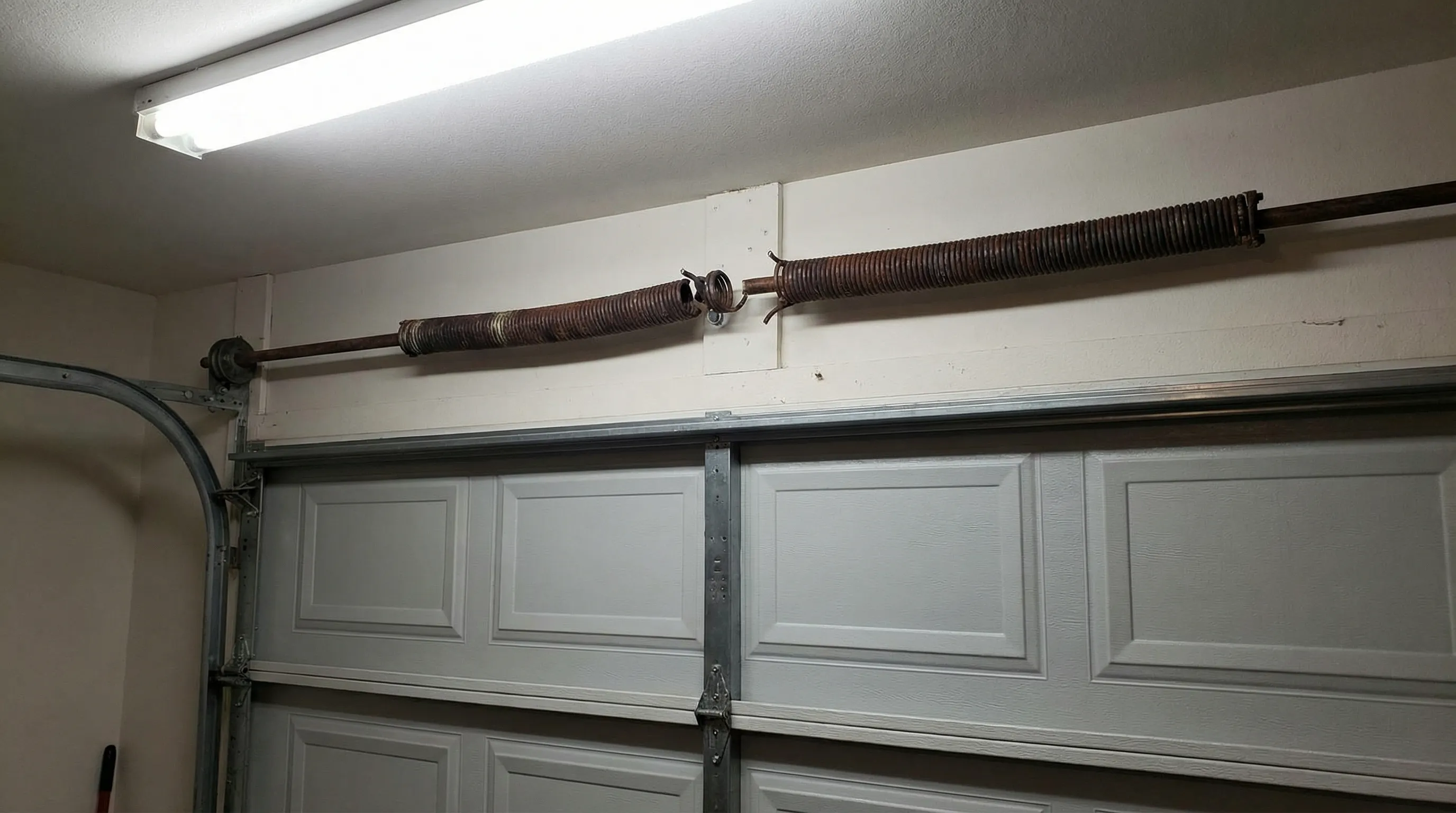
Your overhead garage door is the single largest moving part in your entire home. On average, a typical garage door opens and closes four to six times a day, totaling well over 1,500 operations every single year. In a place like Baytown , Texas, those mechanical parts take a heavy beating. From hot, humid summer afternoons near the Washington's Headquarters neighborhood to freezing winter ice storms blowing through the Historic District, northern Texas weather tests the limits of your home's exterior components.
When your garage door breaks down, it is more than just an inconvenience—it is a security risk, a severe safety hazard, and a massive roadblock to your daily routine. Skipping routine maintenance leads to sudden spring snaps, burnt-out openers, and jammed tracks.
This comprehensive guide breaks down everything you need to know about proactive maintenance, essential repairs, local climate factors, and how simple adjustments can add years to your system's life.
The Baytown Climate Challenge: How Local Weather Destroys Garage Doors
Baytown homeowners enjoy four distinct seasons, but those environmental changes wreak havoc on mechanical systems. Understanding how local weather affects your garage door helps you catch small problems before they require costly emergency repairs.
+-------------------------------------------------------------------+
| SEASONAL IMPACT ON GARAGE DOORS |
+-------------------------------------------------------------------+
| WINTER SUMMER |
| * Metal contracts (shrinking) * Humidity expands wood |
| * Springs snap from brittle steel * Openers overheat |
| * Weatherstripping freezes to ground * Electronics fail |
+-------------------------------------------------------------------+
Winter Freezes and Metal Contraction
During Baytown winters, temperatures regularly drop well below freezing. Cold weather causes metal to contract. When steel torsion springs contract, they become brittle and undergo extreme tension stress. This is why most garage door springs snap during the coldest mornings of the year. Furthermore, moisture pooled at the base of your driveway can freeze your bottom rubber weather seal directly to the concrete. Trying to open a frozen door can tear the rubber seal, burn out your opener motor, or snap your lift cables.
Summer Humidity and Thermal Expansion
Texas summers bring high humidity and heat. Humidity causes wood garage doors to absorb moisture, swell, and increase in total weight. This extra weight puts severe strain on your opener motor, counter balance springs, and track rollers. High temperatures can also dry out cheap lubricants, turning them into sticky, gummy paste that attracts dirt and jams your rollers.
Seasonal Freeze-Thaw Cycles
The constant shifting between freezing nights and warm days causes driveway concrete to shift and heave slightly. Even a tiny quarter-inch shift in your garage floor creates unequal pressure on your door's bottom track, forcing the door to close unevenly and wearing down tracks on one side faster than the other.
Anatomy of an Overhead Garage Door System
To handle basic troubleshooting and talk knowledgeably with a technician, it helps to know the main parts of your garage door system.
[ TORSION SPRING ]========[ CABLE DRUM ]
|| ||
[ TOP TRACK ] [ LIFT CABLES ]
|| ||
[ HINGES/ROLLERS ] [ BOTTOM BRACKET ]
|| ||
=================================================
| GARAGE DOOR PANEL |
=================================================
1. Counterbalance Spring System
The springs do the heavy lifting—not your garage door opener motor. Openers merely guide the door up and down; springs do 90% of the muscle work.
- Torsion Springs: Mounted horizontally on a metal shaft above the door opening. As the door closes, heavy-gauge steel springs wind up, storing massive amounts of mechanical energy.
- Extension Springs: Mounted parallel to the upper tracks on both sides. They stretch out linearly as the door lowers down.
2. Roller and Track Assembly
- Tracks: Galvanized steel channels running vertically up the wall and horizontally along the ceiling.
- Rollers: Small wheels attached to the door panels that slide inside the tracks. Available in raw steel, hard plastic, or sealed-bearing nylon.
3. Cables and Drums
High-tension steel aircraft cables attach to the bottom corners of the door and wind onto notched aluminum drums at the ends of the torsion bar. As the springs unwind, they spin the drums, winding the cables to lift the door smoothly.
4. Hinges, Brackets, and Weatherstripping
Sectional doors consist of four to five individual panels connected by heavy-duty steel hinges. Bottom brackets hold the lift cables under immense tension, while perimeter weatherstripping keeps out wind, rain, and cold air drafts.
Essential Inspections: The 10-Minute Monthly Visual Check
Preventive maintenance begins with early detection. Performing a simple visual and audible check every month takes less than ten minutes and costs nothing.
+-------------------------------------------------------------------+
| MONTHLY 10-MINUTE CHECKLIST |
+-------------------------------------------------------------------+
| [ ] Listen for unusual scraping, grinding, or squeaking noises |
| [ ] Inspect lift cables for severe fraying or rusty strands |
| [ ] Check track alignment for loose wall bracket fasteners |
| [ ] Inspect rollers for flat spots, cracks, or worn bearings |
| [ ] Run the balance test (disconnect opener, lift door by hand) |
+-------------------------------------------------------------------+
Step 1: The Sound & Sight Test
Stand inside your garage with the door completely down. Press your wall button or remote to operate the door, listening carefully to the full cycle.
- Squeaking or Screeching: Indicates dry, unlubricated hinges or rollers.
- Grinding: Points to worn opener gears, metal scraping metal on tracks, or failing roller bearings.
- Popping or Clunking: Often signals sticking spring coils, a bent track, or a loose section hinge.
Step 2: Cable Inspection
Look closely at the steel cables running from the bottom brackets up to the drums. Never touch cables under tension. Search visually for worn strands, rust buildup, or loose wrapping around the cable drums. A single frayed wire strand means the cable is near failure and requires urgent attention.
Step 3: Roller and Track Review
Examine your track channels for dents, rust, or loose mounting bolts. Look at the roller wheels. Steel rollers without bearings should turn freely without slop. Nylon rollers should have smooth edges without cracks, missing chunks, or flat spots.
Critical Repairs That Significantly Extend Door Lifespan
Fixing small issues quickly stops compounding wear and tear from destroying the expensive main components of your door setup.
COMPONENTS WEAR OVER TIME
Unbalanced Door -------> Strain on Opener Motor
| |
v v
Uneven Cable Wear --------> Track Misalignment
| |
+-------------> TOTAL SYSTEM FAILURE <---+
1. Spring Maintenance and Replacement
Garage door springs are rated by "cycles." One cycle equals one full opening and one full closing. Standard factory springs are typically rated for 10,000 cycles, which translates to roughly 7 to 10 years of normal family use.
When one spring breaks on a dual-spring setup, always replace both springs at the same time. Both springs were installed together and have undergone the exact same stress cycles. The remaining old spring will almost certainly break within a few weeks of replacing its partner.
Safety Warning: Torsion springs store enough tension energy to shatter bone or cause lethal injury. Never attempt to untighten, adjust, or remove torsion springs yourself. Always hire a professional, insured garage door technician equipped with specialized winding bars.
2. Cable Replacement and Reel Re-tensioning
Cables operate under the exact same high tension as your springs. Over time, cable strands stretch, rust, and wear out. If a cable snaps while the door is opening, the door can slam down sideways, damaging the tracking system, destroying the bottom door panel, and endangering anyone standing underneath.
Catching rusty or frayed cables early saves you from emergency door replacements. Replacing worn cables costs a fraction of the price of replacing a crushed panel section.
3. Upgrading Rollers: From Steel to Nylon
If your garage door currently uses standard, unsealed steel rollers, upgrading to heavy-duty sealed nylon rollers is one of the single best investments you can make for your system.
Feature | Standard Steel Rollers | Commercial Nylon Rollers |
Noise Level | Loud metal-on-metal grinding | Whisper-quiet operation |
Lifespan | 5,000 - 10,000 cycles | 20,000 - 50,000+ cycles |
Maintenance | Requires frequent lubrication | Zero maintenance (sealed bearings) |
Rust Resistance | Prone to corrosion in damp garages | 100% rustproof |
Nylon rollers with 13-ball sealed bearings roll exceptionally smoothly, reducing vibration across the entire door. Less vibration means less stress on hinges, track brackets, and your motor's internal drive gears.
4. Track Realignment and Securing Fasteners
Over years of daily operation, thousands of small motor vibrations loosen the lag screws holding your vertical tracks to the wall studs. A track that slips out of plumb by even a quarter-inch forces the rollers to bind inside the metal track channel. This extra resistance drags down your opener motor. Re-aligning, plumbing, and tightening track brackets prevents panel damage and preserves opener motor health.
DIY vs. Professional Repairs: Staying Safe
Homeowners can safely handle simple preventive maintenance items. However, knowing your limits keeps you safe and prevents costly property damage.
+------------------------------------------------------------------+
| DIY VS. PROFESSIONAL REPAIRS |
+------------------------------------------------------------------+
| SAFE FOR HOMEOWNERS CALL A PROFESSIONAL |
| * Lubricating moving parts * Torsion/extension springs |
| * Replacing perimeter seal * High-tension lift cables |
| * Tightening hinge bolts * Track re-alignment |
| * Cleaning optical safety sensors * Opener motor gear replaces |
+------------------------------------------------------------------+
Safe DIY Maintenance Projects
Proper Lubrication Technique
Never use standard WD-40, silicone sprays, or engine grease on your garage door. WD-40 is a solvent that strips away factory lubricants, while thick grease attracts grit, dirt, and sand, turning into an abrasive paste that grinds down metal.
Use a silicone-based or lithium-based garage door lubricant spray.
- Springs: Spray a light coat along the top of the torsion springs. The oil penetrates between the coiling rings, reducing internal friction and quiet binding.
- Hinges: Spray a quick mist onto every hinge pivot point.
- Rollers: Spray directly into the ball-bearing centers of each roller wheel. Do not spray plastic or nylon wheel surfaces.
- Pulleys: Spray the center bearings of extension spring end pulleys.
Cleaning Photo-Eye Safety Sensors
Near the bottom of your vertical tracks sit two safety sensors. If their invisible infrared beam is broken, the door will automatically reverse to prevent crushing objects. Dust, cobwebs, lawn mower debris, and stray leaves frequently block these lenses. Wipe the lenses clean using a damp microfiber cloth and ensure both indicator lights glow steadily without flickering.
Dangers Requiring Professional Care
- Torsion & Extension Springs: Under extreme torsion force.
- Bottom Brackets & Cables: Attached directly to high-tension spring lines.
- Bent Door Sections: Requiring structural reinforcement or section replacement.
- Internal Opener Gears: Requiring motor head disassembly.
For further reading on electrical and garage door safety standards, check the consumer safety guidelines at Consumer Product Safety Commission.
Energy Efficiency & Insulation: Protecting Your Baytown Home
Many homes in Baytown feature attached garages or living spaces built directly above the garage bay. An uninsulated garage door lets cold winter air sweep inside, chilling surrounding walls, freezing water pipes, and driving up home heating bills.
+--------------------------------------------------------------------+
| INSULATION TYPES & PERFORMANCE |
+--------------------------------------------------------------------+
| TYPE R-VALUE DURABILITY NOISE REDUCTION |
| Non-Insulated R-0 to R-1 Low Minimal |
| Polystyrene Foam R-6 to R-8 Moderate Moderate |
| Polyurethane Foam R-12 to R-18 High Exceptional |
+--------------------------------------------------------------------+
R-Value Breakdown
R-value measures thermal resistance to heat flow. The higher the R-value, the better the door insulates your home.
- Single-Layer (Non-Insulated): Consists of a thin sheet of raw steel. Offers zero insulation (R-0 to R-1).
- Double-Layer (Polystyrene Insulated): Features a steel outer layer backed by rigid polystyrene foam panels (R-6 to R-8).
- Triple-Layer / Sandwich Construction (Polyurethane Insulated): Injected polyurethane foam expands between two heavy-gauge steel sheets (R-12 to R-18+).
Polyurethane vs. Polystyrene
Polyurethane insulation is injected as a dense foam that expands into every interior nook and cranny of the steel door section. This creates a solid, rigid core that drastically increases panel structural strength, dampens street noise, and delivers maximum thermal protection against brutal Texas winters.
Weatherstripping Maintenance
Even high R-value insulation fails if cold air leaks through perimeter gaps. Check your bottom rubber threshold seal and vinyl side weatherstripping annually. If the rubber is cracked, stiff, or torn, replace it immediately.
To learn more about home energy efficiency standards and thermal insulation performance ratings, review guidelines provided by the U.S. Department of Energy.
Troubleshooting Common Garage Door Problems
Use this simple step-by-step troubleshooting guide to diagnose common garage door issues before scheduling a service call.
Problem 1: The Door Won't Close and Opener Lights Flash
- Cause: The optical safety sensor beam is misaligned, dirty, or blocked.
- Solution: Check the photo-eye sensors at the base of the left and right tracks. Clear away any objects, wipe off dirty lenses, and ensure both small LED indicator lights glow steadily. If one light flickers, gently bend its bracket by hand until it aligns straight with the opposite sensor.
Problem 2: The Opener Runs, But the Door Doesn't Move
- Cause: The emergency manual disconnect cord was pulled, disengaging the door from the drive carriage.
- Solution: Pull the red emergency cord back toward the opener motor unit to re-engage the drive gear spring latch. Then, run the opener once; it will snap back into place automatically.
Problem 3: The Door Opens Partway and Reverses
- Cause: Unbalanced door, broken spring, or incorrect travel limit settings.
- Solution: Pull the manual release cord while the door is completely closed. Lift the door manually to waist level and let go.
- If the door stays balanced in place, your springs are adjusted properly.
- If the door falls shut or shoots upward rapidly, your spring tension is out of balance. Contact a professional technician immediately.
Problem 4: Loud Screeching or Popping Noise During Operation
- Cause: Dry, unlubricated metal components or worn track rollers.
- Solution: Apply a liberal coat of dedicated garage door aerosol lubricant to torsion springs, hinges, and roller bearings. If the noise continues, your rollers may need to be replaced.
When to Repair vs. Replace Your Overhead Garage Door
Deciding whether to repair an existing door or invest in a brand-new system comes down to overall condition, safety, and long-term costs.
REPAIR OR REPLACE DECISION TREE
|
Is the damage structural (bent frame/warped sections)?
/ \
YES NO
/ \
Is the door over 15 years old? Fix the individual part
/ \ (cables, springs, rollers)
YES NO
/ \
REPLACE ENTIRE DOOR REPLACE SINGLE PANEL
Factors Favoring a Quick Repair
- Single Failed Component: The door panels are in good physical condition, but a spring, cable, or single hinge broke.
- Recent Installation: The door setup is less than 10 years old and has been well-maintained.
- Minor Misalignment: The tracks need basic adjustment or lubrication.
Factors Favoring Complete Replacement
- Multiple Damaged Panels: If two or more sections are cracked, rotted, or dented, replacing individual panels often costs almost as much as buying a brand-new door system.
- Aging Systems (15+ Years): Older doors lack modern safety features like pinch-proof panel designs and updated photo-eye sensors.
- Severe Sagging or Structural Warping: A warped wood or bent steel frame puts constant strain on tracks and openers, leading to frequent breakdowns.
- Upgrading Curb Appeal: Replacing an old garage door offers one of the highest returns on investment (ROI) of any home improvement project, regularly recovering over 90% of its cost at home resale, according to nationwide remodeling statistics compiled by Remodeling Magazine.
Frequently Asked Questions (FAQs)
How do I manually open my garage door during a power outage?
Pull the red emergency release cord hanging from your opener's trolley track to disengage the motor drive. Once disengaged, grip the lifting handle near the bottom of the door panel and manually raise the door straight up along its tracks.
Why does my garage door make a loud bang sound when opening or closing?
A sudden, loud bang that sounds like a gunshot inside your garage almost always indicates a torsion spring breaking under high tension. If this occurs, do not attempt to operate the door electronically or manually, as the unsupported door weight can destroy your opener or fall unexpectedly.
How often should I lubricate my overhead garage door moving parts?
You should apply a dedicated silicone or white lithium garage door lubricant to your springs, hinges, and roller bearings every six months. Regular bi-annual lubrication prevents rust buildup, reduces operational noise, and cuts down on mechanical friction wear.
Can I replace a single broken garage door panel, or do I need a whole new door?
Yes, you can replace a single damaged panel section as long as your door manufacturer still produces that specific model design and size. However, if your door is over ten years old, matching the exact color finish, texture, and wood grain may be difficult, making a full door replacement more cost-effective.
Final Thoughts
Your overhead garage door works hard every single day to protect your vehicles, store your belongings, keep your home safe, and maintain your home's thermal insulation. By taking a proactive approach to routine maintenance—performing simple visual checks, keeping moving parts lubricated with proper sprays, upgrading to quiet nylon rollers, and respecting local weather changes—you can easily double the operating lifespan of your door system while preventing costly emergency breakdowns. When high-tension cables, springs, or heavy structural repairs are needed, relying on trained professionals keeps your home safe and ensures your door operates reliably for years to come.
How Can Mcleod Overhead Doors and Springs Help You?
At Mcleod Overhead Doors and Springs, we bring years of hands-on expertise, professional tools, and reliable service to every repair job. Whether you need an emergency torsion spring replacement, off-track door realignment, quiet nylon roller upgrades, or a complete high-efficiency door system installation, our team gets the job done right the first time. We take pride in delivering fast, friendly, and honest garage door service tailored to your home's exact needs.
Don't wait for a broken cable or snapped spring to leave your car trapped inside your garage. Contact our friendly team today to schedule your comprehensive tune-up or request an estimate on expert repairs!
- Company Name: Mcleod Overhead Doors and Springs
- Business Address: 8820n N Hwy 146, Baytown, TX 77520, USA
- Phone Number: (281) 603-2885


