

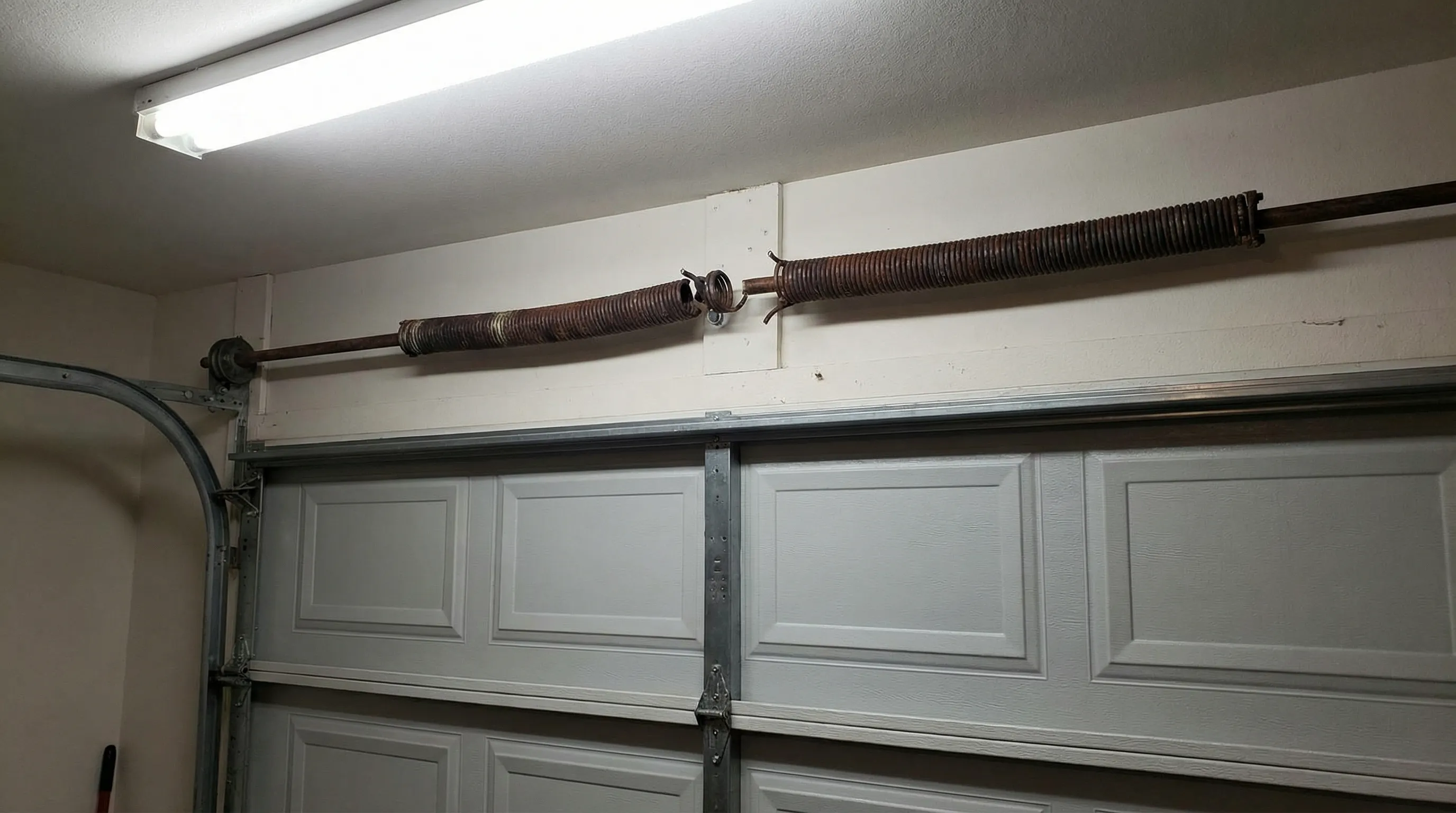
Imagine rushing out the door on a frosty January morning in Baytown, Texas, only to press your garage door opener and hear a deafening "BANG!" sounding like a gunshot. The door stays firmly shut, your car is trapped inside, and your entire morning routine grinds to a halt. For many homeowners, this scenario is all too common during the winter transition. While Texas winters are generally milder than those up north, sudden cold snaps, humidity shifts, and years of heavy lifting take a severe toll on your garage door system.
Your garage door is actually the largest and heaviest moving mechanical object in your home, typically weighing between 130 and 400 pounds. Yet, it feels as light as a feather when you lift it manually or click your remote. How is that possible? The secret lies in the unsung heroes of your garage: the torsion or extension springs. These tightly wound coils store mechanical energy to counterbalance the immense weight of the door.
As the year comes to a close, performing a thorough year-end inspection of your springs is one of the smartest home maintenance steps you can take. Neglecting a worn-out spring can lead to sudden failure, property damage, or even severe personal injury. In this comprehensive guide, we will explore everything you need to know about garage door spring repair, how the Texas climate affects your hardware, warning signs of impending failure, and why partnering with local professionals like McLeod Overhead Doors and Springs ensures your home stays safe and secure all year long.
Understanding Your Garage Door Springs: Torsion vs. Extension
Before diving into maintenance and troubleshooting, it helps to understand the anatomy of your garage door system. Not all springs are created equal, and knowing which type your home uses is crucial for proper care and replacement.
Torsion Springs: The Powerhouses Above Your Door
If you look above the closed garage door, you will likely see one or two tightly coiled metal springs mounted on a steel shaft attached to a metal plate. These are torsion springs.
- How they work: Torsion springs operate through torque, meaning they twist and wind up as the door closes, storing rotational energy. When you open the door, that stored energy unwinds, effectively lifting the weight off the tracks.
- Durability: Torsion springs are generally safer, longer-lasting, and more balanced than extension springs. They provide a smooth, controlled lift and are standard on most modern residential garage doors.
- Lifecycle: Standard residential torsion springs are rated for a specific number of "cycles" (one complete cycle equals opening and closing the door once). Most standard springs last between 10,000 and 15,000 cycles, which translates to roughly 7 to 10 years of normal use for an average family.
Extension Springs: The Side-Mounted Pullers
If you do not see springs mounted above your door, look along the horizontal tracks running back into your garage ceiling. These are extension springs.
- How they work: Extension springs stretch and contract horizontally along the sides of the upper tracks. As the door closes, the springs stretch out to store energy, and as it opens, they contract to pull the door up.
- Safety note: Extension springs store energy in a way that makes them prone to whipping violently if they snap. This is why safety containment cables running through the center of extension springs are an absolute must-have safety feature for any home.
- Lifecycle: Extension springs typically wear out a bit faster than torsion springs because of the constant lateral stress placed on their hook ends, usually lasting around 8,000 to 10,000 cycles.
To learn more about mechanical engineering principles behind mechanical springs, you can explore external resources like The Spring Research Institute for technical deep-dives.
The Baytown Climate Factor: How Texas Weather Affects Metal Springs
Baytown, TX, boasts a unique coastal-influenced subtropical climate. While we enjoy warm sunshine and mild winters compared to northern states, our local environment creates hidden challenges for mechanical hardware.
Humidity, Salt Air, and Rust
Baytown sits near Galveston Bay and the Houston ship channel, meaning our air carries high levels of moisture and trace salt particulates. When moisture meets untreated steel, oxidation begins.
- Surface Rust vs. Deep Corrosion: Surface rust is an early warning sign that protective coatings are wearing off. If left unaddressed, rust eats away at the steel wire, pitting the surface and drastically reducing the spring's load capacity and cycle life. A rusty spring is brittle and much more likely to snap under pressure.
- Lubrication Breakdown: High humidity causes standard greases and oils to wash away, dry out, or attract abrasive dust and dirt particles. Using the wrong lubricant can actually gum up the coils and accelerate wear.
The Thermal Shock of Winter Temperature Swings
Texas winters are famous for dramatic temperature swings. You might experience a humid 75°F afternoon followed by a sudden cold front dropping temperatures down into the 30s overnight.
- Metal Contraction: Metals expand in the heat and contract in the cold. When a sudden cold snap hits Baytown in late December or January, the steel in your garage door springs contracts rapidly.
- Brittle Stress: This sudden thermal shock places extreme stress on metal that has already been weakened by thousands of cycles of use. If a spring has microscopic fatigue cracks, the contraction caused by a chilly January morning is often the final straw that causes it to snap.
For climate data and weather patterns affecting our region, check out updates from The National Weather Service Houston/Galveston.
Warning Signs That Your Garage Door Springs Are Failing
Garage door springs rarely fail without giving warnings beforehand. Recognizing these signs allows you to schedule professional garage door spring repair before you experience a complete lockout or emergency failure.
1. The Door Feels Unusually Heavy
If your automatic garage door opener suddenly struggles to lift the door, or if you pull the red emergency release cord and find you can barely lift the door manually, your springs have lost their tension. The springs are responsible for roughly 90% of the door's weight; if they fail, the opener is forced to bear the entire load, which will quickly burn out the motor gear.
2. Visible Gaps in the Coils
Take a flashlight and inspect your torsion springs while the door is closed. A healthy spring features tight, uniform coils touching each other side-by-side. If you notice a visible gap of an inch or two between the coils, the spring has snapped internally, even if it hasn't completely separated into two pieces.
3. The Door Opens Crooked or Slanted
When a two-spring torsion system suffers a single spring failure, the remaining good spring bears an uneven load. This causes the door to rise crookedly, binding in the tracks, jerking violently, or getting stuck halfway up. Never force a crooked door to operate, as this can bend the tracks and damage the panels.
4. Loose or Sagging Cables
Torsion and extension systems rely on cables to transfer lifting force. If a spring weakens or breaks, the cables immediately lose tension. Loose, frayed, or dangling cables are a glaring sign that your counterbalance system is compromised.
5. Strange Noises During Operation
While a squeaky hinge needs a quick spray of lubricant, a loud grinding, popping, or snapping sound originating from the spring assembly indicates serious friction, tension binding, or metal fatigue.
For general home safety standards regarding moving mechanical components, refer to guidelines published by The Consumer Product Safety Commission.
The Dangers of DIY Garage Door Spring Repair
With thousands of online tutorial videos available, many homeowners consider tackling garage door spring replacement as a weekend DIY project to save a few dollars. However, garage door spring repair is widely recognized by professionals as one of the most dangerous DIY tasks a homeowner can attempt.
Extreme Stored Energy
Torsion springs are wound under immense tension. When a spring is fully wound, it holds enough kinetic force to lift hundreds of pounds. If that energy is released uncontrollably—such as by slipping a winding bar or using the wrong tool—the results are catastrophic. Homeowners frequently suffer severe hand lacerations, broken fingers, facial trauma, chipped teeth, or bone fractures from flying metal fragments or whipping bars.
Specialized Tools Required
Properly adjusting or replacing torsion springs requires professional-grade tools, including solid steel winding bars (never use screwdrivers, as they can bend and slip under torque), locking pliers, socket sets, and precise measuring gauges to determine wire gauge, inner diameter, and spring length. Using improvised tools dramatically increases the risk of injury.
Incorrect Calibration and Imbalance
Replacing a spring isn't just about putting a piece of metal in place; it requires exact mathematical winding based on the exact weight, height, and track radius of your specific door. If a spring is wound too tight, the door will fly open uncontrollably. If it is wound too loose, the opener will struggle. Incorrectly balanced doors place uneven wear on rollers, hinges, bearings, and openers, leading to costly secondary repairs down the road.
Rather than risking personal safety and property damage, trusting trained technicians at McLeod Overhead Doors and Springs guarantees the job is done safely, correctly, and backed by professional warranties.
What to Expect During a Professional Spring Replacement Service
When you call McLeod Overhead Doors and Springs for garage door spring repair in Baytown TX, you can expect a streamlined, professional process designed to restore your home's security and convenience efficiently.
Step 1: Comprehensive System Evaluation
Our expert technician arrives on-site and begins by inspecting the entire garage door system. We don't just look at the broken spring; we check the cables, drums, center bearing plates, end bearing plates, rollers, tracks, and the condition of your automatic opener. We measure your existing springs to determine the exact wire size, length, and winding direction (left-hand or right-hand wound) to ensure an exact factory-spec match.
Step 2: Safe De-Tensioning and Removal
Safety is our top priority. The technician secures the door in the closed position, disconnects the automatic garage door opener, and uses proper winding bars to safely release any remaining tension from unbroken springs before unbolting the hardware. Worn-out springs, frayed cables, and damaged cones are safely removed from the shaft.
Step 3: Installation of High-Cycle Replacement Springs
We install high-quality replacement springs designed to withstand heavy daily use and resist local environmental corrosion. For optimal performance, if you have a two-spring system where one spring has snapped, we always recommend replacing both springs simultaneously. Because both springs were installed at the same time and endured the same number of cycles, the second spring is likely fatigued and close to failing as well.
Step 4: Precision Winding and Balancing
Once the new springs are securely mounted to the center bracket and end plates, the technician winds the springs to the exact manufacturer-specified number of turns. The door is then tested manually to verify smooth travel up and down the tracks, ensuring zero binding and perfect weight counterbalance.
Step 5: Lubrication, Safety Testing, and Cleanup
Finally, we lubricate all moving parts—including springs, hinges, rollers, and tracks—using a specialized non-tacky garage door lubricant that won't attract dust. We perform a final auto-reverse safety test on your electronic opener to ensure compliance with modern safety standards, clean up our work area, and leave your garage running whisper-quiet.
Proactive Year-End Maintenance Tips to Extend Spring Life
Preventative maintenance is the key to maximizing the lifespan of your garage door hardware and avoiding emergency repair calls during freezing January mornings. Follow these expert tips before the year ends:
1. Perform a Monthly Visual Inspection
Once a month, take two minutes to look over your garage door system. Check for signs of rust spots on the springs, fraying on the steel lift cables, loose nuts or bolts on the track brackets, and wear on the nylon rollers. Catching a small issue early prevents a major breakdown.
2. Keep Your Springs and Tracks Lubricated
Every six months—ideally once in the spring and once in the late fall before winter sets in—lubricate your torsion springs, hinges, and roller bearings. Use a silicone-based or lithium-based spray lubricant specifically formulated for garage doors. Never use heavy grease, WD-40, or cooking oil, as these substances attract dirt and grit that gums up moving parts.
3. Test the Balance Bi-Annually
Disconnect your automatic opener by pulling the red manual release cord while the door is fully closed. Manually lift the door about halfway up and let go.
- A properly balanced door will stay in place, hovering roughly halfway open.
- If the door slams shut or flies upward, your spring tension is out of balance, and you should call a professional technician for adjustment.
4. Clear Debris from the Tracks and Perimeter
Keep the floor and tracks free of leaves, dirt, and holiday decorations. Accumulated debris can cause the door to jam, placing sudden asymmetric torque on the springs and cables.
Frequently Asked Questions (FAQs)
Can I spray WD-40 on my garage door torsion springs to stop them from squeaking?
No, WD-40 is a solvent rather than a true lubricant, meaning it will strip away protective oils and attract dirt that accelerates spring wear. Instead, use a dedicated silicone or white lithium spray specifically designed for garage door hardware.
How do I know if my garage door has torsion springs or extension springs?
Torsion springs are mounted horizontally on a steel shaft directly above the door opening, whereas extension springs run parallel to the overhead horizontal tracks stretching back toward the motor.
Is it safe to open my garage door manually if one of the torsion springs is broken?
Opening a door with a broken spring manually is extremely dangerous because the full 150 to 300-pound weight of the door is unsupported, which can cause it to crash down violently or strain your back.
Why do garage door springs always seem to break during cold weather months?
Cold winter temperatures cause steel to contract and become more brittle, which easily triggers a fracture in metal that has already been weakened by thousands of previous opening cycles.
Final Thoughts
Your garage door is the primary entryway for your family, safeguarding your vehicles, tools, and home security. When spring mechanisms wear out, ignoring the problem only leads to greater headaches, property damage, and safety risks. By understanding how your springs operate, recognizing the warning signs of failure, and committing to proactive year-end maintenance before January arrives, you can ensure your garage door operates smoothly, safely, and reliably all year long. When you need expert care, routine checks, or emergency assistance, having a trusted local professional on speed dial makes all the difference.
How Can Mcleod Overhead Doors and Springs Help You?
When you need reliable, prompt, and expert garage door spring repair in Baytown TX, trust the local professionals at Mcleod Overhead Doors and Springs. Whether you are dealing with a snapped spring, a crooked door, or want a comprehensive year-end safety inspection before January, our experienced technicians are here to provide top-tier service with honest pricing and quality craftsmanship.
Business Address: 8820n N Hwy 146, Baytown, TX 77520, United States
Phone Number: (281) 603-2885


