

Living in Baytown, Texas, means enjoying the beautiful waters of Burnet Bay, great local parks, and a tight-knit community. However, it also means dealing with a brutal coastal climate. Between heavy Gulf storms, tropical winds, intense heat, and year-round high humidity, our homes take a beating.
While you might focus on protecting your roof or windows, there is another massive part of your home that bears the brunt of Texas weather: your garage door.
As the largest moving object on your property, your garage door keeps your family safe and your home secure. Yet, many homeowners do not realize how quickly moisture and high winds can cause hidden damage. In this comprehensive guide, we will look at how Baytown’s unique climate impacts your garage system and explain when it is time to call for professional garage door repair.
The Ultimate Guide to Baytown Weather and Your Garage Door
To understand why your garage door acts up, you have to look at the environment around it. Baytown sits right on the Gulf Coast region. This location creates a perfect storm of environmental factors that constantly attack metal, wood, and electronic components.
Understanding the Baytown Climate Factor
According to local weather data, Baytown experiences an average annual humidity level that frequently hovers above 70%. When you combine that thick, moisture-heavy air with temperatures that soar past 90°F for months at a time, you get a highly corrosive environment.
Additionally, our geographic location makes us a prime target for severe weather. From afternoon thunderstorms to massive tropical depressions and hurricanes, your garage door faces sudden pressure changes and heavy downpours.
+-----------------------------------------------------------------+
| BAYTOWN CLIMATE PROFILE |
+-----------------------------------+-----------------------------+
| Average Annual Humidity | 70%+ (High Moisture) |
+-----------------------------------+-----------------------------+
| Peak Summer Temperatures | 90°F - 100°F+ |
+-----------------------------------+-----------------------------+
| Primary Weather Risks | Tropical Storms, Hurricanes |
| | Heavy Rain, Salt-Air Rust |
+-----------------------------------+-----------------------------+
Why Your Garage Door is the Most Vulnerable Opening
When a major storm rolls through Harris and Chambers counties, high winds push against your house. Because a garage door covers such a wide opening, it acts like a giant sail. If the door bends, buckles, or fails under pressure, high-speed winds can rush inside your garage. This sudden influx of air can create an upward pressure loop strong enough to blow the roof right off a house.
How High Humidity Quietly Destroys Garage Door Components
While a hurricane causes sudden, obvious destruction, humidity is a silent thief. It works slowly every single day to weaken your door system from the inside out. Here is how moisture damages the vital parts of your door.
1. The Onset of Rust and Corrosion on Hardware
Your garage door relies on dozens of metal moving parts to lift hundreds of pounds smoothly. High humidity accelerates oxidation, which leads to rust.
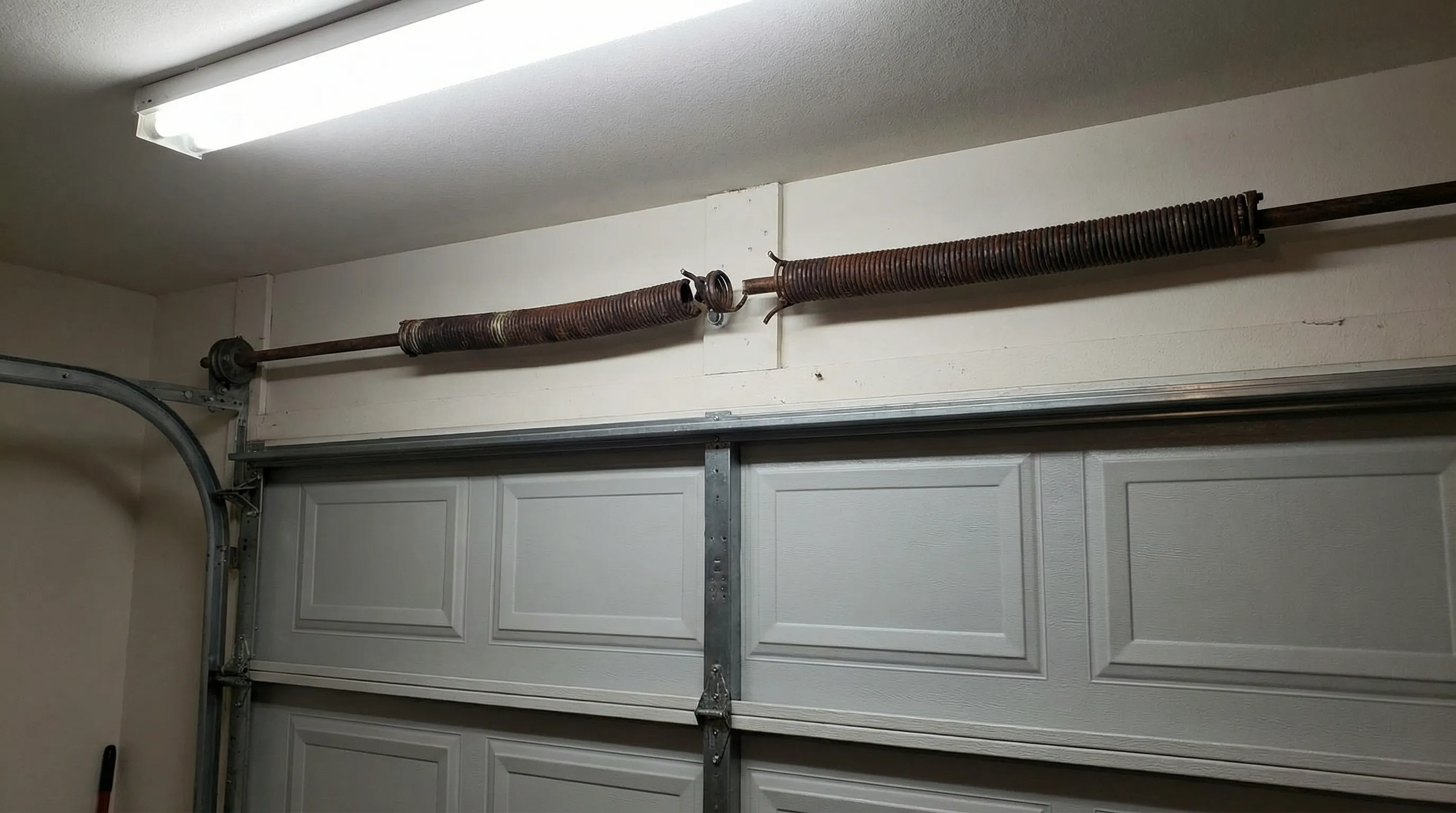
- The Springs: Your torsion or extension springs are under massive amounts of tension. When rust creeps into the coils, it creates friction and micro-fractures. A rusted spring is a ticking time bomb that can snap without warning.
- The Tracks and Rollers: Metal tracks can develop rough, rusted spots. When steel rollers travel over these spots, they get stuck, causing the door to jerk, squeak, or go off-track.
- Cables and Hinges: The lifting cables are made of thin, braided steel strands. Humidity can cause internal rust that rots the cable from the inside, leading to a sudden snap that drops the door.
2. Swelling and Warping of Wooden Doors
If you own a classic wooden garage door or a composite door with a wood frame, humidity is your number one enemy. Wood is porous, meaning it acts like a sponge.
- Weight Increase: As wood absorbs moisture from the thick Baytown air, it becomes significantly heavier. Your garage door opener and springs are calibrated to lift a very specific weight. A waterlogged door strains the entire system, causing openers to burn out prematurely.
- Warping and Misalignment: When wood dries out and gets wet repeatedly, it twists and warps. A warped door will not sit flush in its tracks. This leaves gaps at the edges and puts uneven stress on the tracks, making it difficult or impossible to close.
3. Electronic Failures in the Garage Door Opener
Humidity does not just stay outside; it creeps right into your garage. Most garages in Texas are not air-conditioned, meaning the air inside is just as damp as the air outside.
- Circuit Board Corrosion: The electronic brain inside your garage door opener consists of sensitive circuit boards. Moisture can cause short circuits or slow corrosion on the metal solder joints, leading to random opening and closing, or a complete system failure.
- Safety Sensor Malfunctions: The photo-eye safety sensors located at the bottom of your door tracks are highly sensitive. High humidity can cause condensation to form over the lenses, blocking the invisible beam and preventing your door from closing.
The Destruction Caused by Gulf Coast Storms
While humidity does its damage over months and years, a single Texas thunderstorm or tropical event can ruin a garage door in minutes.
High Winds and the "Sail Effect"
As mentioned earlier, wind pressure is a major threat in Baytown. Standard garage doors are built to withstand basic wind loads, but many older doors lack the necessary structural bracing for coastal storms.
When high winds push against an unreinforced door, the panels can bend inward. Once a panel creases or buckles, the door loses all its structural integrity and can be ripped completely out of its tracks.
Torrential Rain and Flash Flooding
Baytown is no stranger to sudden, heavy downpours that cause localized flooding. If water pools around the base of your garage door, it can ruin the bottom section of your system.
- Insulation Rot: Many modern doors feature polyurethane or polystyrene insulation sandwiched between metal skins. If water gets inside the panel, it ruins the insulation and creates a breeding ground for mold.
- Bottom Seal Degradation: The rubber weatherstripping at the bottom of your door is designed to keep water out. However, standing water and street chemicals can cause the rubber to rot, crack, and fall apart.
Wind-Borne Debris Impacts
Storm winds carry loose tree branches, lawn furniture, and trash cans down the street. If a heavy object strikes your garage door, it can cause severe dents or puncture the outer skin. Even a small dent can alter the balance of the door, putting extra strain on your garage door repair components.
Real-World Troubleshooting Scenarios
As a homeowner, it helps to know exactly what to look for when weather damage occurs. Here are three common scenarios Baytown residents face and how to identify them.
Scenario A: The Squeaking, Jerking Door After a Rainy Week
- The Problem: You notice that after a solid week of heavy rain and high humidity, your garage door makes a loud grinding or squeaking noise when opening. It also seems to hitch or shake as it moves up the tracks.
- The Cause: The moisture has washed away the lubrication on your rollers and hinges, and surface rust is beginning to form inside the tracks.
- The Fix: Wipe down the inside of the tracks with a clean cloth to remove dirt and moisture. Apply a high-quality, non-silicone synthetic lubricant specifically designed for garage doors to the rollers, hinges, and springs. Avoid using WD-40, as it attracts dirt and dries out quickly.
Scenario B: The Door Reverses Automatically on Sticky Summer Days
- The Problem: On a hot, incredibly humid July afternoon, you try to close your garage door. It goes down halfway, pauses, and then automatically reverses back to the open position, flashing its overhead light.
- The Cause: Condensation has built up over the lenses of your safety eyes, or the high heat has slightly warped a track, causing the opener to detect excessive resistance.
- The Fix: First, take a soft microfiber cloth and gently wipe the lenses of both safety sensors to remove any fog or moisture. If the problem persists, check the track alignment to see if a localized heat pocket has caused the metal to expand and shift.
Scenario C: Sagging Panels Post-Storm
- The Problem: A severe storm with 60 mph wind gusts passes through town. The next day, you look at your closed garage door and notice that the top panels look like they are bowing inward or sagging in the middle.
- The Cause: The wind pressure exceeded the door's load limit, bending the horizontal reinforcement struts or creasing the steel skin.
- The Fix: Do not attempt to force the door open, as the bent panels can cause the door to bind and snap a cable. This requires immediate professional attention to reinforce or replace the damaged panels safely.
Proactive Maintenance: Shielding Your Door from the Texas Elements
You cannot change the weather in Baytown, but you can change how prepared your home is to handle it. Regular preventative maintenance is the best way to extend the lifespan of your garage system and avoid unexpected breakdowns.
+-----------------------------------------------------------------+
| GARAGE DOOR MAINTENANCE CHECKLIST |
+-------------------+---------------------------------------------+
| Visual Inspection | Check for rust, frayed cables, and tears |
| | in weatherstripping every month. |
+-------------------+---------------------------------------------+
| Lubrication | Apply garage door lubricant to springs, |
| | hinges, and rollers every 3 to 6 months. |
+-------------------+---------------------------------------------+
| Balance Test | Disconnect opener and lift door halfway. |
| | It should stay in place without moving. |
+-------------------+---------------------------------------------+
| Clean Sensors | Wipe safety eye lenses to remove dirt, |
| | dust, and built-up humidity condensation. |
+-------------------+---------------------------------------------+
1. Perform Regular Lubrication Cycles
Because humidity accelerates rust, keeping your moving parts lubricated is crucial. Every three to six months, apply a dedicated garage door lubricant to your torsion springs, roller bearings, and hinges. This creates a protective barrier that repels moisture and prevents metal-on-metal friction.
2. Inspect and Replace Weatherstripping
Your weatherstripping is your first line of defense against both humidity and storm water. Check the rubber seals on the bottom and sides of your door regularly. If you see cracks, tears, or places where the seal has flattened out, replace it immediately. A tight seal keeps the damp Texas air outside where it belongs.
3. Keep the Tracks Clean
Dirt, dust, and moisture can combine to create a thick grime inside your tracks. Once or twice a year, use a damp cloth to clean out the inside of the tracks. Never spray lubricant directly inside the tracks, as this will cause dirt to stick and clog the rollers.
4. Schedule an Annual Professional Tune-Up
While DIY maintenance is great, there are certain things only a trained technician can handle. Springs are under lethal amounts of tension, and adjusting them requires specialized tools and expertise. An annual inspection by a professional team ensures that your door remains perfectly balanced and structurally sound ahead of storm season.
When to Call a Professional for Garage Door Repair
Many garage door tasks are perfectly safe for a homeowner to tackle. However, attempting to fix major issues yourself can result in serious injury or worse. You should always contact a professional team for garage door repair if you experience any of the following:
- Broken Springs: If you hear a loud bang from your garage and your door will not lift, your spring has likely snapped. Never attempt to replace a torsion spring on your own.
- Frayed or Snapped Cables: Cables hold the weight of the door. If they are fraying due to rust, they can snap at any moment and cause the door to crash down.
- Severely Misaligned Tracks: If your door is hanging crookedly or has jumped completely out of its tracks, trying to force it back in place can bend the frame and ruin the entire system.
- Opener Motor Smoke or Internal Grinding: Electrical repairs or internal gear replacements should always be handled by a technician to prevent fire hazards and ensure proper warranty coverage.
Frequently Asked Questions (FAQs)
Can the salty coastal air in Baytown cause my garage door to rust faster than inland doors?
Yes, the proximity to saltwater bays means the moisture in Baytown contains tiny airborne salt particles that aggressively accelerate the oxidation process on standard steel garage doors.
How do I know if my garage door is wind-rated for a hurricane?
You can look for a manufacturer's label on the inside of your garage door panels that lists the design pressure rating, or check for heavy-duty horizontal steel reinforcement struts attached across the back of each panel.
Why does my garage door opener remote work less effectively when it is extremely hot and humid outside?
Extreme heat and humidity can cause minor swelling in the plastic housing of the remote or cause signal interference due to heavy moisture droplets in the air absorbing the radio frequencies.
Can I paint my rusted garage door panels to stop the damage from spreading?
Painting over existing rust will only trap the moisture and allow the corrosion to continue eating through the metal underneath; the rust must be completely sanded down, treated with a chemical rust-inhibitor, and primed before any topcoat is applied.
Final Thoughts
Your garage door works incredibly hard to keep your Baytown home safe, dry, and secure. However, the relentless combination of high humidity, coastal salt air, and intense Gulf storms means your garage system requires consistent attention. By staying on top of basic maintenance, wiping down your components, and keeping an eye out for early signs of rust and wear, you can protect your investment and avoid major operational failures. When the elements do manage to cause damage, prompt professional intervention is the key to restoring your home's safety and peace of mind.
How Can McLeod Overhead Doors and Springs Help You?
When the unpredictable Texas weather takes a toll on your home, you need a local team you can trust to get things back in working order quickly and safely. At McLeod Overhead Doors and Springs, we have years of hands-on experience dealing specifically with the unique climate challenges faced by homeowners in the Baytown area.
Whether your system needs heavy-duty corrosion-resistant springs, a wind-load upgrade to prepare for hurricane season, or immediate emergency garage door repair after a severe storm, our highly skilled technicians are ready to deliver top-tier service. We pride ourselves on transparent pricing, exceptional workmanship, and fast response times to keep your home secure.
Don't wait for a small squeak to turn into a dropped door. Contact our friendly local team today to schedule your comprehensive multi-point inspection or repair service!
- Business Name: McLeod Overhead Doors and Springs
- Business Address: 8820 N Hwy 146, Baytown, TX 77520
- Phone Number: (281) 603-2885


