

Every single day, your garage door does a massive amount of heavy lifting. It opens and closes when you leave for work, when the kids come home from school, and when you pull in after a long day. It is the largest moving object in your entire home.
But if you live in Baytown, Texas, your garage door has a much tougher job than doors in other parts of the country.
Down here near the Gulf Coast, our homes are constantly under attack by the elements. We have intense heat, thick humidity, salty air, and severe tropical storms that roll through Harris and Chambers counties. Over time, this harsh environment takes a major toll on your garage door system. Springs snap, tracks bend, panels warp, and rust eats away at critical steel components.
When your door fails, it isn't just an inconvenience—it can be a major safety hazard and a threat to your home’s security. That is where professional garage door repair becomes absolutely vital.
As a garage door technician with 15 years of hands-on experience, I have seen exactly what the coastal Texas climate does to overhead doors. In this comprehensive guide, we will break down how Baytown’s weather impacts your garage door, how to spot warning signs early, and what you can do to protect your investment.
The Baytown Climate Challenge: Why Local Weather Matters
To understand why you might need garage door repair in Baytown, TX, you have to look at our unique climate. We love living near the water, but the atmosphere behaves like a slow-motion wrecking ball for mechanical systems.
Extreme Humidity and Condensation
Baytown experiences high relative humidity throughout most of the year. This moisture hangs heavy in the air and settles on your garage door every night as the temperature drops.
When moisture sits on metal components like rollers, tracks, hinges, and springs, it creates the perfect breeding ground for oxidation. If your garage is uninsulated, that humidity gets trapped inside, causing a sauna-like effect that accelerates metal degradation and causes wooden doors to warp or rot.
Salt-Air Corrosion
Because Baytown sits right on the water near Galveston Bay and the Houston Ship Channel, our air carries a higher concentration of salt than inland areas. Salt acts as an accelerator for chemical reactions. When salt water vapor lands on standard raw or galvanized steel garage door parts, it breaks down the protective zinc coatings. Once that coating is gone, red rust spreads rapidly, weakening heavy-duty springs and freezing up moving parts.
Intense Storms and High Winds
From sudden summer thunderstorms to massive tropical systems and hurricanes, Baytown gets its fair share of severe weather. High winds exert incredible pressure on large, flat surfaces like a double-car garage door. If a garage door is not properly reinforced or rated for local wind loads, a strong storm can buckle the panels, rip the door completely out of its tracks, or cause a structural failure that compromises the roof of your entire home.
Storm Damage: Defending Your Home Against High Winds
When a major storm system pushes through Southeast Texas, your garage door is your home’s first line of defense. If the wind forces its way inside your garage, it can create a powerful upward pressure system capable of blowing the roof right off your house.
Wind Load Requirements in Coastal Texas
Because of our geographical location, garage doors in Baytown must meet specific wind load ratings established by local building codes. A standard, non-reinforced door meant for an inland state will not cut it here.
Wind-loaded doors feature heavy-duty internal steel reinforcements, beefier tracks, and stronger support struts. These design elements help the door withstand both positive pressure (wind pushing against the outside) and negative pressure (wind pulling the door outward from the inside).
Common Signs of Storm Damage
Sometimes storm damage is obvious, like a tree branch crashing through a panel. Other times, the damage is subtle but just as dangerous. Look out for these signs after a major weather event:
- Bent or Bowed Panels: If the door looks slightly curved or creased when closed, wind forces have compromised its structural integrity.
- Misaligned or Twisted Tracks: Strong winds can shake the frame of your garage, causing the heavy vertical and horizontal steel tracks to shift out of alignment.
- Loose or Missing Hardware: Severe vibrations during a storm can back out screws, loosen bolts, and cause hinges to crack.
- Straining Opener Motor: If your automatic garage door opener makes a grinding noise or struggles to lift the door after a storm, the door may be out of balance due to wind damage.
Troubleshooting Scenario: The Door Stalls Post-Storm
Imagine a heavy thunderstorm rolls through Baytown overnight. The next morning, you press the wall button to go to work. The door moves up six inches, makes a loud straining sound, and stops completely.
What happened? The wind pressure may have bent one of your tracks or shifted the header bracket above the door. This creates friction that the opener’s safety sensors detect as an obstruction, causing the system to shut down to prevent motor burnout. Trying to force the door open in this situation can ruin your opener or cause the cables to snap. It requires a professional evaluation to realign the system safely.
The Silent Killer: Humidity and Mechanical Wear
While storms cause sudden, dramatic damage, humidity works slowly and silently. It creeps into every nook and cranny of your garage door system, causing wear and tear that can sneak up on homeowners.
How Moisture Affects Garage Door Openers
Your garage door opener is not just a motor; it is a complex electronic appliance. High humidity can cause condensation to form inside the motor casing. This moisture can short out the circuit board, corrode electrical contacts, and cause the remote control receiver to malfunction. If your door starts opening or closing on its own, or if the wall button stops responding consistently, humidity may be wreaking havoc on the internal electronics.
Wooden Door Warping and Rot
While modern steel and composite doors are popular, many beautiful homes in the Baytown area feature traditional wooden garage doors. Wood absorbs moisture from the air. In high humidity, the wood swells. When the weather dries out or gets hot, the wood shrinks.
This constant expansion and contraction causes the wood to warp, crack, and split. A warped wooden door becomes heavy and uneven, putting immense stress on the springs and opener. Furthermore, trapped moisture leads to wood rot, which destroys the door's structural strength over time.
Roller and Bearing Failures
Your garage door relies on a series of rollers that glide inside the tracks. These rollers have small ball bearings inside them that allow for smooth rotation.
[Standard Steel Roller] --> Exposed to Humidity --> Bearings Seize --> Roller Drags & Wears Track
[Sealed Nylon Roller] --> Shielded from Moisture --> Smooth Gliding --> Protects System Long-Term
Standard steel rollers with open bearings quickly succumb to humidity. The moisture washes away the internal grease, causing the bearings to rust and seize. When a roller stops rolling, it begins to slide and drag along the metal track. This creates a terrible screeching noise, wears down the track, and forces your garage door opener to work twice as hard to move the door.
Rust Damage: Identifying and Treating the Corrosion Enemy
Rust is the absolute enemy of any mechanical system made of iron and steel. In Baytown, the combination of humidity, oxygen, and salt air creates the ideal environment for rust to thrive.
Torsion Springs: The Danger Zone
Your garage door springs do all the heavy lifting. They are wound under an incredible amount of tension to balance the weight of the door. Most standard springs are made of high-carbon steel.
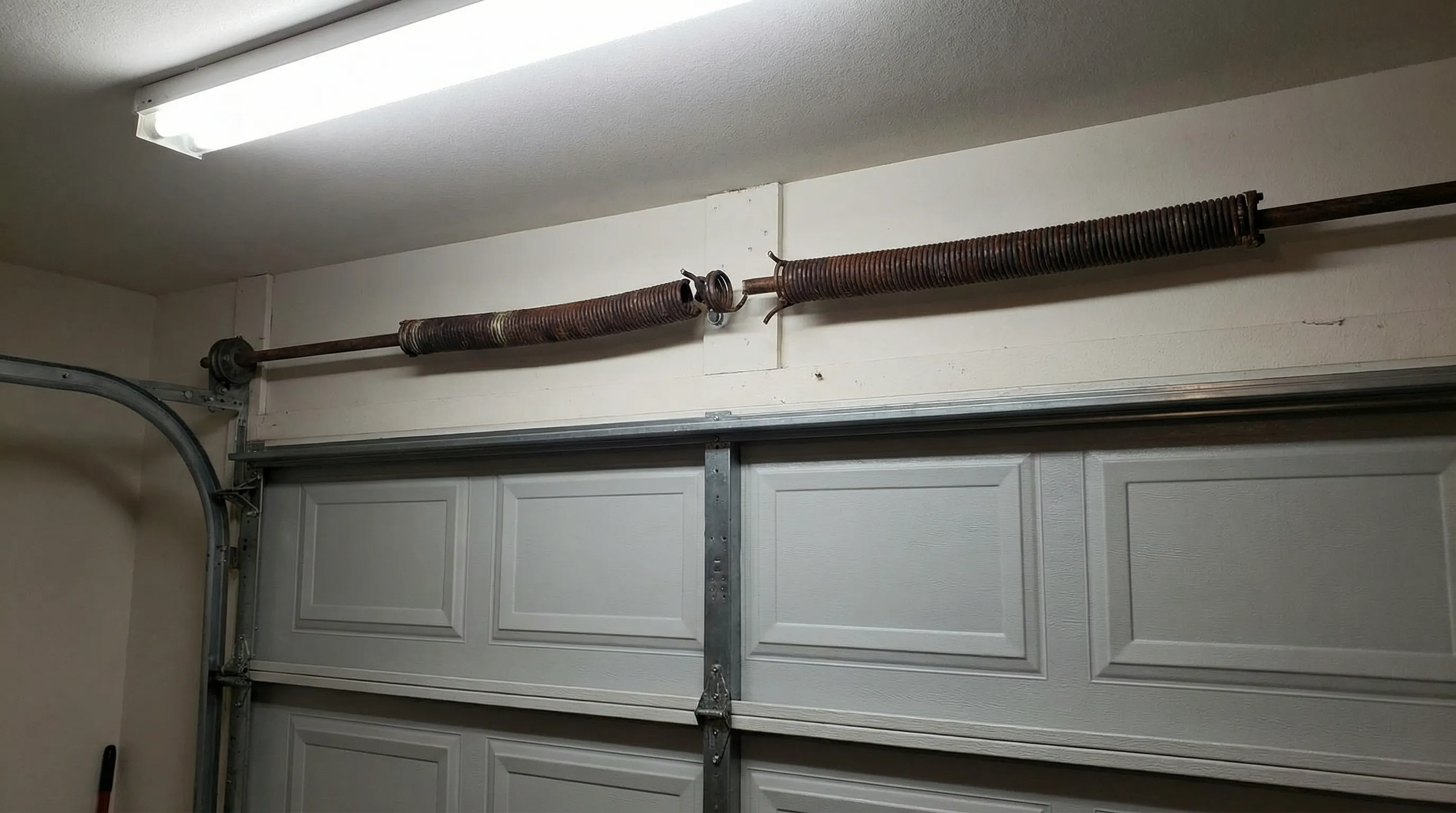
When rust forms on a torsion spring, it creates tiny pits and cracks along the coils. As the spring winds and unwinds, these rusty spots become weak points. The friction between the rusty coils creates heat and stress, which eventually causes the spring to snap with a sound like a gunshot.
DANGER NOTE: A snapped garage door spring is highly dangerous. Never attempt to replace or adjust a torsion spring yourself. The tension involved can cause severe injury or property damage. Always call a certified professional for spring-related garage door repair.
Bottom Brackets and Weatherstripping Failures
The bottom of your garage door takes the worst beating. When it rains, water puddles at the base of the door. The rubber weatherstripping on the bottom of the door is designed to keep water out, but over time, heat and humidity cause the rubber to crack, flatten, and rot.
Once the weatherseal fails, water seeps into the bottom section of the door. The steel bottom brackets—which hold the cables that lift the door—sit right in this moisture zone. Rust quickly attacks these brackets and the bottom panel, causing the metal to flake away and weaken. If a bottom bracket rusts through while the door is under tension, the cable can break free, causing the door to crash down violently.
Component | Impact of Rust | Risk Level | Recommended Action |
Torsion Springs | Creates micro-fractures; leads to sudden, violent snapping. | High | Professional replacement with galvanized or high-cycle springs. |
Cables | Frays steel strands; causes the door to drop or hang crookedly. | High | Immediate replacement by an experienced technician. |
Tracks | Causes rough operation; can snag rollers and jam the door. | Medium | Cleaning, realignment, or replacement if structurally thin. |
Hinges & Brackets | Binds moving joints; causes panels to separate or tear. | Medium | Regular lubrication or replacement with heavy-gauge hardware. |
DIY Preventive Maintenance for Baytown Homeowners
While major repairs should always be left to the pros, there are several simple maintenance tasks you can perform to protect your garage door from the harsh Baytown climate. Consistent maintenance can add years to the lifespan of your system and save you thousands of dollars in emergency garage door repair costs.
1. The Visual and Audio Inspection
Every month, stand inside your garage with the door closed and perform a thorough visual inspection. Look closely at:
- The springs for any signs of red rust or gaps between coils.
- The lift cables for fraying, rust, or loose strands near the bottom brackets.
- The rollers for cracks, flat spots, or rust build-up.
- The tracks for bends, dents, or loose mounting brackets along the wall.
Next, open the door using the automatic opener and listen carefully. A healthy garage door should operate relatively quietly with a steady hum. If you hear loud grinding, scraping, popping, or squeaking sounds, something is wrong and requires attention.
2. The Balance Test
An unbalanced garage door is one of the leading causes of premature opener failure. To test your door’s balance, follow these steps:
- Close the garage door completely.
- Disconnect the opener by pulling the emergency release cord (usually a red cord with a handle).
- Lift the door manually. It should lift smoothly with minimal effort.
- Stop lifting when the door is halfway open (around waist height) and let go.
If the door stays in place or hovers slightly, your springs are properly balanced. If the door crashes to the floor, the springs have lost their tension. If the door shoots upward violently, the springs are wound too tight. If your door fails this test, do not re-engage the opener; contact a professional technician immediately.
3. Lubrication is Your Best Defense
In a high-humidity environment like Baytown, proper lubrication is your number one defense against rust and wear. However, using the wrong lubricant can actually cause more damage.
Never use WD-40 on your garage door tracks or moving parts. WD-40 is a degreaser and a solvent, not a long-lasting lubricant. It will strip away existing grease, dry out quickly, and attract dirt, dust, and hair, creating a sticky sludge that jams up your rollers.
Instead, use a high-quality lithium-based grease or a silicone spray lubricant specifically designed for garage doors.
Every 3 to 6 months, apply lubricant to the following areas:
└── Torsion Springs: Spray a light coat across the coils to reduce friction.
└── Hinges: Lubricate the pivot points where the door panels bend.
└── Rollers: Spray the ball bearings inside the rollers (avoid the outside track surface).
└── Bearing Plates: Lubricate the bearings on the outer ends of the spring shaft.
manually
Keep the tracks themselves clean by wiping the insides with a damp cloth to remove dirt and debris, but do not spray lubricant inside the tracks. The rollers need friction to roll; excess lubricant will cause them to slide and wear out unevenly.
4. Keep it Clean
Regularly washing your garage door helps remove salt residue and dirt that holds moisture against the surface. Wash the outside of your door with a soft sponge, warm water, and a mild dish soap at least twice a year. Rinse it thoroughly with a garden hose (avoid using a high-pressure power washer, which can blast away protective paint and force water past the seals).
When to Call a Professional Garage Door Technician
Many homeowners pride themselves on their DIY skills, but garage door systems require specialized knowledge and heavy-duty tools. Attempting complex repairs yourself can be incredibly dangerous and may void your manufacturer's warranty.
The Dangers of High-Tension Components
The torsion spring system stores enough mechanical energy to lift a 200-pound door with ease. If that energy is released uncontrollably due to an improper tool or an accidental slip, it can cut through flesh and bone instantly. The bottom brackets and lift cables are also under this extreme tension. If you notice problems with these parts, step away and call a professional who has the training and safety equipment to handle them.
Structural Realignment and Track Replacement
If your garage door tracks have been bent by wind or hit by a vehicle, they cannot simply be hammered back into shape. The tracks must be perfectly parallel, level, and plumb for the door to move safely. A professional technician uses precision laser levels and heavy-gauge steel replacements to ensure the door runs flawlessly without binding or derailing.
Upgrading to Weather-Resistant Upgrades
If your current garage door is constantly rusting or struggling with the climate, a professional team can recommend local upgrades designed for coastal conditions:
- Powder-Coated Hardware: Upgrading standard hinges and brackets to powder-coated versions provides an extra layer of defense against salt air and humidity.
- Nylon Rollers with Sealed Bearings: These rollers eliminate exposed metal bearings, preventing rust and ensuring completely silent, smooth operation for years.
- Insulated Sandwiched Panels: Doors built with a steel-polyurethane-steel "sandwich" construction offer exceptional structural strength against high winds and help regulate the temperature inside your garage, reducing internal humidity.
Frequently Asked Questions (FAQs)
Can I paint over rust on my garage door panels to fix the problem?
Painting over active rust will only trap moisture and allow the corrosion to continue eating through the steel underneath. You must first scrape away the loose rust with a wire brush, sand the area down to bare metal, apply a rust-inhibiting primer, and then paint it with a high-quality exterior latex paint.
Why does my garage door remote only work when I am standing right next to the door?
This issue is often caused by local radio frequency (RF) interference or signal degradation due to high humidity corroding the opener's internal antenna wire. Try replacing the remote batteries first, but if the issue persists, a technician may need to inspect the receiver logic board for moisture damage.
How do I know if my garage door is wind-load rated for a hurricane?
You can look for a manufacturer's data sticker located on the inside of one of your garage door panels. This label will state the design pressures (expressed as positive and negative PSF, or Pounds per Square Foot) and indicate whether it complies with local Texas Department of Insurance (TDI) windstorm building codes.
Is it normal for my garage door tracks to have a black, greasy residue inside them?
No, black buildup inside the tracks is usually a mixture of accumulated dirt, dust, and improper lubricants like WD-40 or heavy grease. This residue should be cleaned out immediately with a degreaser and a rag, as it forces the rollers to slide rather than roll, leading to flat spots and mechanical strain.
Final Thoughts
Living in Baytown, TX, means enjoying beautiful coastal views and great community vibes, but it also means staying vigilant against the damaging effects of our climate. Storms, humidity, and rust are constant threats to your home's garage door system. By understanding these threats, performing regular inspections, keeping your system properly lubricated, and acting quickly when warning signs appear, you can ensure your garage door remains safe, secure, and reliable for decades to come. Don't wait for a broken spring or a jammed track to leave your car trapped inside your garage—take a proactive approach to maintenance today.
How Can Mcleod Overhead Doors and Springs Help You?
When it comes to protecting your home from the tough Texas weather, you need a local expert you can trust. At Mcleod Overhead Doors and Springs, we have years of hands-on experience dealing with the unique climate challenges of the Baytown area. Whether your door has suffered severe storm damage, your torsion springs are rusted and ready to snap, or you want to upgrade to a wind-load-rated, rust-resistant overhead door system, our team of highly trained, fully certified technicians is ready to help.
We pride ourselves on providing honest, dependable, and fast service to our neighbors throughout the community. We don't just patch up problems—we provide long-term solutions that give you peace of mind during storm season and throughout the entire year.
Don't let a faulty, rusted, or damaged garage door compromise your home's safety and curb appeal. Get in touch with your local garage door repair experts today to schedule a comprehensive safety inspection, tune-up, or emergency repair service.
- Business Address: 8820n TX-146, Baytown, TX 77520
- Phone Number: (281) 603-2885


