

It is a stressful morning in Baytown. You press the remote, the garage door starts to lift, and then it jerks, squeals, and freezes. We see this all the time at McLeod Overhead Doors and Springs. A family in Wooster Heights once called after their garage door stopped halfway with the kids buckled in for school. The cause turned out to be a tiny pebble wedged in the track and a dry roller that had not been lubricated in years. Five minutes of cleaning and the right lubricant made a big difference, and the family was on their way.
Across Baytown, garage doors work hard every single day. Many homeowners only pay attention when something goes wrong. The good news is that most sticky doors can be fixed with smart steps and safe checks. Proper garage door troubleshooting often prevents small issues from becoming costly repairs, and it helps everyone stay safe around heavy moving equipment.
This guide is written by the team at McLeod Overhead Doors and Springs to be easy to follow and highly practical. We specialize in residential and commercial garage door service, garage door repair, and professional installation. Whether you own a new garage door or an older system that has seen many seasons, you will learn how the system works, how to spot problems early, and how to choose the right fix. If a repair is risky, we will tell you when to stop and call a trained technician.
How a Garage Door System Works in Plain Language
Your garage door is a balanced mechanical system with electrical helpers. When it is set up the right way, the motor does not lift the entire weight. Instead, springs carry most of the load so the opener only guides motion.
Main parts and what they do
- Door panels: The sections that make up the visible garage door. They connect with hinges so the door bends around the curve of the track.
- Hinges: Allow each panel to pivot smoothly as the door moves.
- Rollers: Small wheels that ride inside the tracks and keep the door aligned.
- Tracks: Metal rails on both sides that guide the rollers up and down.
- Springs: Torsion springs sit above the door on a shaft, or extension springs run along the sides. Springs store energy and counterbalance the door’s weight.
- Cables and drums: Steel cables are spooled on drums to lift the door evenly. They are critical safety parts.
- Garage door opener: The motor unit with a rail and trolley that moves the door. It can be a chain drive, a belt drive, or a direct drive.
- Safety sensors: The photo eyes near the floor that stop the door from closing on people or objects.
- Weather stripping: Seals at the bottom and sides that keep out water, dust, and pests.
- Controls: Remote control, keypad, and wall button that tell the opener what to do.
If any part is worn, loose, dirty, or misaligned, the whole system can bind, chatter, or stop.
The Top Reasons a Garage Door Gets Stuck
1) Dry or contaminated moving parts
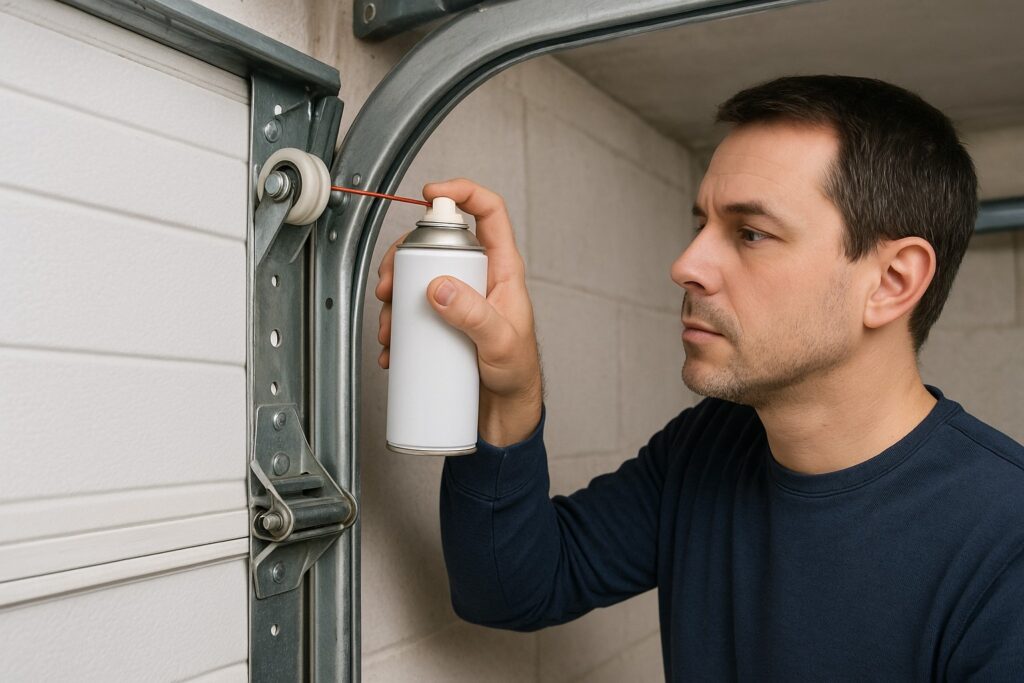
Rollers, hinges, and springs need the right lubricant to glide. Dust and old grease turn into a sticky paste that slows movement. In coastal and humid areas like Baytown, airborne moisture can mix with dust and cause light surface rust. Proper lubrication and regular maintenance services keep parts clean and fast.
What you can do
- Wipe rollers and hinges with a clean cloth.
- Apply a light, garage-rated silicone or lithium spray to rollers, hinges, and the torsion spring surface.
- Avoid heavy oils that collect dirt.
2) Track misalignment or dents
Tracks must be straight, parallel, and firmly anchored. A small bend or a loose bracket can pinch a roller and stop the door. Vehicles bumping the track, kids’ bikes, or storage items can cause subtle bends.
What you can do
- Look for shiny rub marks where the roller scrapes the track.
- Tighten loose lag screws on track brackets.
- If the track is visibly bent or the door tilts, stop and call for service to avoid making it worse.
3) Broken or weak springs
Springs counterbalance the door. When a torsion spring breaks, you might hear a loud snap. The door may feel extremely heavy, will not stay halfway, and may not move at all.
What you should not do
- Do not try to replace springs yourself. Springs are under high tension and can cause injury.
- Do not force the opener to lift a door with a broken spring; it can burn out the motor or strip gears.
What to expect from a pro
- Technicians measure the door weight, drum size, and shaft configuration to select the right torsion springs.
- We perform a thorough inspection, replace matched springs, set proper torque, and verify balance.
4) Cable or drum issues
Frayed cables, loose drum set screws, or an uneven cable wrap can make the door lift crooked and bind in the tracks. Cables are safety-critical.
Signs to watch
- One side of the door rises higher than the other.
- You see a cable start to unspool or bird-nest on the drum.
- The bottom section looks jammed at an angle.
Stop using the door and schedule repair and maintenance immediately.
5) Photo eyes blocked or misaligned
If the door refuses to close or stops and reverses, the safety sensors may be dirty or bumped out of alignment. Sun glare, pet tails, lawn tools, or even cobwebs can break the beam.
Quick fix
- Gently clean lenses.
- Confirm that both indicator lights are solid.
- Line up sensors so they face each other at the same height.
6) Weak remote or power issues
Dead batteries, a tripped GFCI, or a loose plug can look like a stuck door. Sometimes a neighbor’s device or nearby radio devices cause interference.
Try this
- Replace the remote battery.
- Check the outlet and GFCI in the garage.
- Try the wall button and keypad to isolate the issue.
7) Panel damage and obstructions
A dented panel can catch in the track. Small objects in the track, like screws or stones, can stop a roller.
Good habits
- Keep the track area clear when storing rakes, sports gear, and bins.
- Inspect panels for bends after any minor vehicle bump.
8) Weather and Baytown’s coastal climate
Humidity and salt in the air speed up corrosion. Cold snaps stiffen grease. Hot months can cause expansion and squeaks.
Local advice
- Use corrosion-resistant hardware where possible.
- Refresh the weather stripping that has hardened or cracked.
- Plan seasonal tune-ups before summer heat and before winter cold.
A Safe, Step-by-Step Garage Door Troubleshooting Checklist
Follow these steps in order. If you hit a safety note, stop and call a professional.
- Confirm power
- Make sure the opener is plugged in.
- Check the breaker and any GFCI outlets.
- Test the wall button, remote, and keypad one by one.
- Look and listen
- Watch the door from inside with the garage light on.
- Note any scraping, squealing, clicking, or grinding.
- Look for wobble, tilt, or a panel that sticks.
- Clear the way
- Remove any items near the tracks.
- Check for pebbles, screws, or debris.
- Clean and lubricate
- Wipe tracks, do not grease them. Tracks should stay clean and dry.
- Lubricate rollers, hinges, and spring surfaces lightly.
- Open and close the door to work in the lubricant.
- Inspect sensors
- Clean lenses and confirm steady indicator lights.
- Ensure sensors are mounted firmly and aligned.
- Test manual balance
- Pull the red emergency release with the door closed.
- Lift the door halfway. A balanced door should stay put.
- If it slams down or shoots up, springs need adjustment by a pro.
- Re-engage and reset the opener
- With the door on the floor, run the opener so the trolley hooks back onto the arm.
- Many openers allow a simple reset by unplugging for 30 seconds.
- Stop for safety
- If you see broken springs, frayed cables, or a crooked lift, do not operate the door.
- Call for professional garage door services.
Deep Dive: Tracks, Rollers, and Alignment
Roller types
- Nylon rollers: Quieter, often smoother, great for most homes.
- Steel rollers: Durable, common on commercial garage doors.
- Sealed bearing rollers: Stay cleaner and last longer, excellent for precision garage door performance.
Signs you need new rollers
- Egg-shaped wheels.
- Wobbly stems.
- Flat spots that thump each rotation.
Track alignment tip
- Tracks should be plumb and parallel. A small gap between the track and roller flange is normal.
- If the track pulls away from the wood framing, the lag screw may be stripped. A longer lag or a wood plug may be needed.
Springs and Balance Explained Simply
Springs store energy to counterbalance door weight. When properly sized and set, the door feels almost weightless. This is why a strong person can lift a heavy door by hand when the springs are correct.
Common spring mistakes
- Using mismatched springs.
- Over-winding to “cover up” the wrong size.
- Ignoring end bearing plates that are seized or noisy.
Professional steps we take
- We weigh the door when necessary.
- We select matched torsion springs by wire size, inside diameter, and length.
- We replace center and end bearings if needed.
- We set the door balance so it rests at mid-travel without drifting.
Garage Door Opener Troubleshooting
Drive types
- Chain drive: Strong and budget-friendly, slightly louder.
- Belt drive: Quiet and smooth for attached garages.
- Direct drive or jackshaft: Mounts on the wall for high-lift or specialty doors, common in certain commercial setups.
When the opener struggles
- If the door is heavy because the springs are weak, the opener will strain. Fix the spring issue first.
- Worn sprockets, travel limits out of range, or stripped drive gears can cause stalls.
Quick checks
- Adjust travel and force limits as described in the manual.
- Replace a brittle or cracked trolley carriage.
- Verify the emergency release rope is not half-pulled and keep the trolley disengaged.

Keypad and remote tips
- Replace batteries yearly.
- Re-program codes if you suspect interference or lost remotes.
- Move Wi-Fi devices or LED bulbs that can create radio noise in rare cases.
Seasonal Maintenance Calendar for Baytown
Every 3 months
- Lubricate rollers, hinges, and spring surfaces.
- Wipe the tracks.
- Check safety sensors and test auto-reverse with a scrap 2×4 under the door.
Every 6 months
- Tighten hinge and track hardware.
- Inspect cables for frays and surface rust.
- Clean the bottom seal and side weather stripping.
Every 12 months (Residential)
- Full tune-up and inspection by a professional.
- Spring balance check and opener force/limit test.
- Battery backup test if your opener has one.
Twice per year (Commercial)
- Thorough inspection with documentation to support safety compliance.
- Roller and hinge replacements should be on a preventive schedule if the door cycles heavily.
Weather Stripping and Energy Efficiency
A good seal keeps out water, dust, and pests. It also helps the garage stay closer to outdoor realfeel temperatures, which protects stored items and reduces energy loss through nearby living spaces.
Types of seals
- Bottom seal: Slides into the straight holder on the bottom retainer.
- Side and top seals: Flexible vinyl that closes gaps along the jambs and header.
- Threshold seal: A floor-mounted rubber strip that mates with the bottom seal to block wind-driven rain.
When to replace
- If you can see daylight around the door.
- If the bottom seal is torn, brittle, or leaves marks on the floor from crumbling rubber.
- If you notice pests, dust lines, or water trails after storms.
Noise Mapping: What That Sound Usually Means
- Chirp or squeak each panel break: Dry hinges. Lubricate the knuckles.
- Rumble or thump once per rotation: Flat-spotted roller.
- Grinding metallic scrape: Roller rubbing the track edge or an out-of-round track.
- Snap or bang: Spring failure. Stop and call for service.
Commercial Garage Doors: Extra Considerations
Commercial doors cycle more often and face harsher conditions. Regular maintenance is not optional. We service rolling steel doors, sectional commercial garage doors, dock leveler interfaces, high-lift tracks, and specialty operators with safety interlocks.
What we check
- Operator brake and chain tension.
- Safety edges, photo eyes, and signage compliance.
- Panel integrity for fire doors and egress paths.
- Scheduled lubrication suited for the duty cycle and environment.
Practical Tools for Homeowners
- Two adjustable wrenches, a nut driver set, and a good flashlight.
- Non-residue cleaner and a soft cloth.
- Garage-rated silicone or white lithium spray.
- Safety glasses and gloves.
What not to DIY
- Spring replacement, cable replacement, drum or shaft work, major track realignment, and anything that requires winding bars or dealing with high tension. Those are professional jobs.
DIY Mistakes to Avoid
- Greasing the tracks: Tracks should be clean, not greasy. Grease collects dust and causes a roller skid.
- Forcing a stuck door with the opener: This can bend panels or strip gears. Find the cause first.
- Bypassing safety sensors: Never tape sensors or jump wires. It removes a life-saving feature.
- Using the wrong fasteners: Small wood screws can strip out. Use proper lag screws in the framing for brackets.
- Ignoring small frays on cables: Replace at the first sign of damage to avoid sudden failure.
Frequently Asked Questions (FAQs)
1. How long should a standard garage door system last before major repairs are needed?
A well-maintained garage door can last 15 to 30 years, depending on its material, usage, and environment. Regular lubrication, yearly inspections, and prompt minor repairs can extend its lifespan and reduce the need for major replacements.
2. What are the signs that my garage door opener is nearing the end of its life?
If your opener struggles to lift the door, makes unusual grinding sounds, or operates inconsistently even after troubleshooting, it may be nearing failure. Frequent resets or delayed response times are also common signs that you may need a new opener.
3. How often should I replace garage door springs?
Garage door springs typically last between 7 and 9 years, or about 10,000 to 15,000 cycles. If your door starts feeling heavier or moves unevenly, the springs may be weakening and should be inspected by a professional before they break.
4. Can extreme humidity or salty air in Baytown affect my garage door’s performance?
Yes. Coastal humidity and salt in the air can cause corrosion on metal parts like cables, tracks, and hinges, leading to friction and early wear. Applying anti-rust treatments, cleaning regularly, and using weather-resistant parts can help prevent these issues.
Choosing a Garage Door Company You Can Trust
Look for a local garage door company that offers full garage door services, including inspections, tune-ups, adjustments, replacement, repair and maintenance, installation services, and emergency service. Ask about training, insurance, parts quality, and warranties. Read local reviews. Make sure they service your exact door type and opener style.
At McLeod Overhead Doors and Springs, our trained technicians handle broken garage doors, malfunctioning openers, custom installations, and precision garage door tune-ups. We support both residential and commercial garage doors with 24/7 repair when you need help fast.
When Repair Becomes Replacement
A new garage door may be the smart choice when:
- The door is heavily rusted, warped, or cracked.
- Panels are discontinued, and multiple sections are damaged.
- Safety features are outdated, and repairs are piling up.
- You want better energy efficiency, better weather stripping, and modern looks.
We guide you through style, insulation values, window options, hardware finishes, and opener upgrades. Professional installation ensures quiet, safe operation from day one.
Simple Safety Rules for Every Family
- Keep remotes out of reach of young children.
- Teach kids never to race under a moving door.
- Do a monthly auto-reverse test with a scrap 2×4 and a soft object for the photo eyes.
- Do not touch springs, cables, or the torsion shaft.
- If the door falls or rises by itself with the opener disconnected, call for service.
Maintenance Services We Recommend
- Thorough inspection of springs, cables, drums, bearings, rollers, hinges, tracks, panels, opener mounts, and safety sensors.
- Tune-up with proper lubrication, fastener tightening, and balance adjustment.
- Weather stripping replacement to keep water and pests out and to improve comfort.
- Opener service, including chain or belt tension, limit checks, and safety testing.
- Documentation of the door’s condition and any parts nearing the end of life, so you can plan.
Cost-Smart Thinking
Spending a little on regular maintenance is smarter than paying for emergency service after a failure. A small cable fray costs little to fix, but can become a major repair if it snaps and drops the door. Keeping rollers in good shape prevents track damage. Balanced springs protect your opener from strain.
Final Thoughts
A stuck garage door is frustrating, but it is also a helpful signal. The system is telling you that friction, misalignment, wear, or settings need attention. With the steps in this guide, you can handle safe checks and small fixes and know exactly when to bring in a professional. That balance keeps your family safe, your door quiet and smooth, and your budget under control.
How Can McLeod Overhead Doors and Springs Help You?
When you are ready for friendly experts who focus on safety, precision, and long-lasting results, our team is here to help with garage door troubleshooting, garage door repair, garage door maintenance, and garage door installation for both homes and businesses. We service springs, torsion springs, cables, rollers, tracks, sensors, hinges, panels, weather stripping, garage door openers, remote control systems, keypads, and gate openers. From quick adjustments to full replacement, we deliver reliable solutions and a clear explanation of every step.
- 24/7 repair and emergency service when your door fails at the worst time
- Regular maintenance and tune-ups that prevent surprise breakdowns
- Professional installation services for a new garage door or opener
- Thorough inspection and documented recommendations so you can decide with confidence
- Local experience with Baytown’s humidity, storms, and coastal conditions
📍 Address: 8820 N Hwy 146, Baytown, TX 77520, United States
📞 Phone: (281) 603-2885
Contact McLeod Overhead Doors and Springs today to schedule your service, request a free tune-up estimate, or book a professional inspection. Let our trained technicians restore smooth, safe operation to your garage door and keep it that way with dependable maintenance services.